

Why “Just Eat Less” Doesn’t Work Long-Term
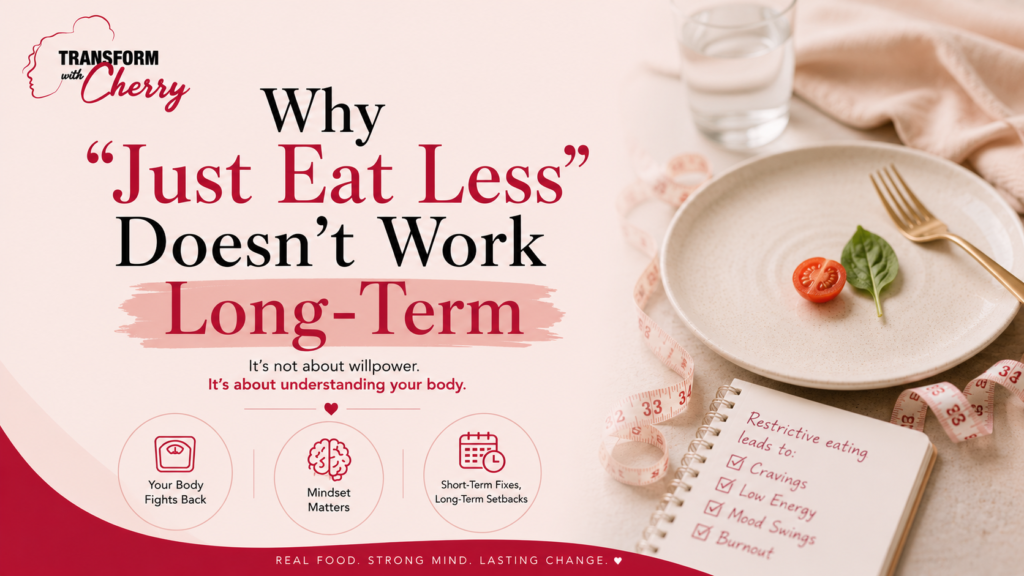
“Just eat less” is technically true and almost always useless as advice. If it worked long-term, diet culture wouldn’t be a multi-billion dollar industry built on people trying — and failing — to keep weight off.
The problem isn’t willpower
Extreme restriction creates a biological and psychological pressure that builds over time. The body responds to prolonged, severe deficits by increasing hunger signals and slowing metabolism — working against the very goal you’re trying to reach.
Restriction breeds rebellion
Tell yourself a food is “off-limits” and it becomes exactly what you think about. This isn’t a personal flaw — it’s a well-documented psychological pattern. The all-or-nothing mindset that restriction creates is often what leads to the binge-restrict cycle so many people get stuck in.
What sustainable actually looks like
- A moderate deficit you can maintain for months, not days
- No foods framed as “bad” — just foods that fit differently into your day
- A plan built around your actual schedule, not a fantasy version of your life
- Enough protein and volume to keep hunger manageable
The goal was never to survive a diet. It’s to build a way of eating you don’t need to escape from once the “diet” ends — because there is no end date.